CRM
Hearth's CRM keeps companies, contacts, and deals next to the work, so the person who quotes a job can see the tasks and work orders behind it.
Who works the CRM
Create a team called Sales under Settings, then Teams, and add the people who work the pipeline. Sales team members see every company, contact, and deal. Admins see everything. Everyone else sees what Hearth's grants say about them, which for CRM records is nothing until you share one.
Deals
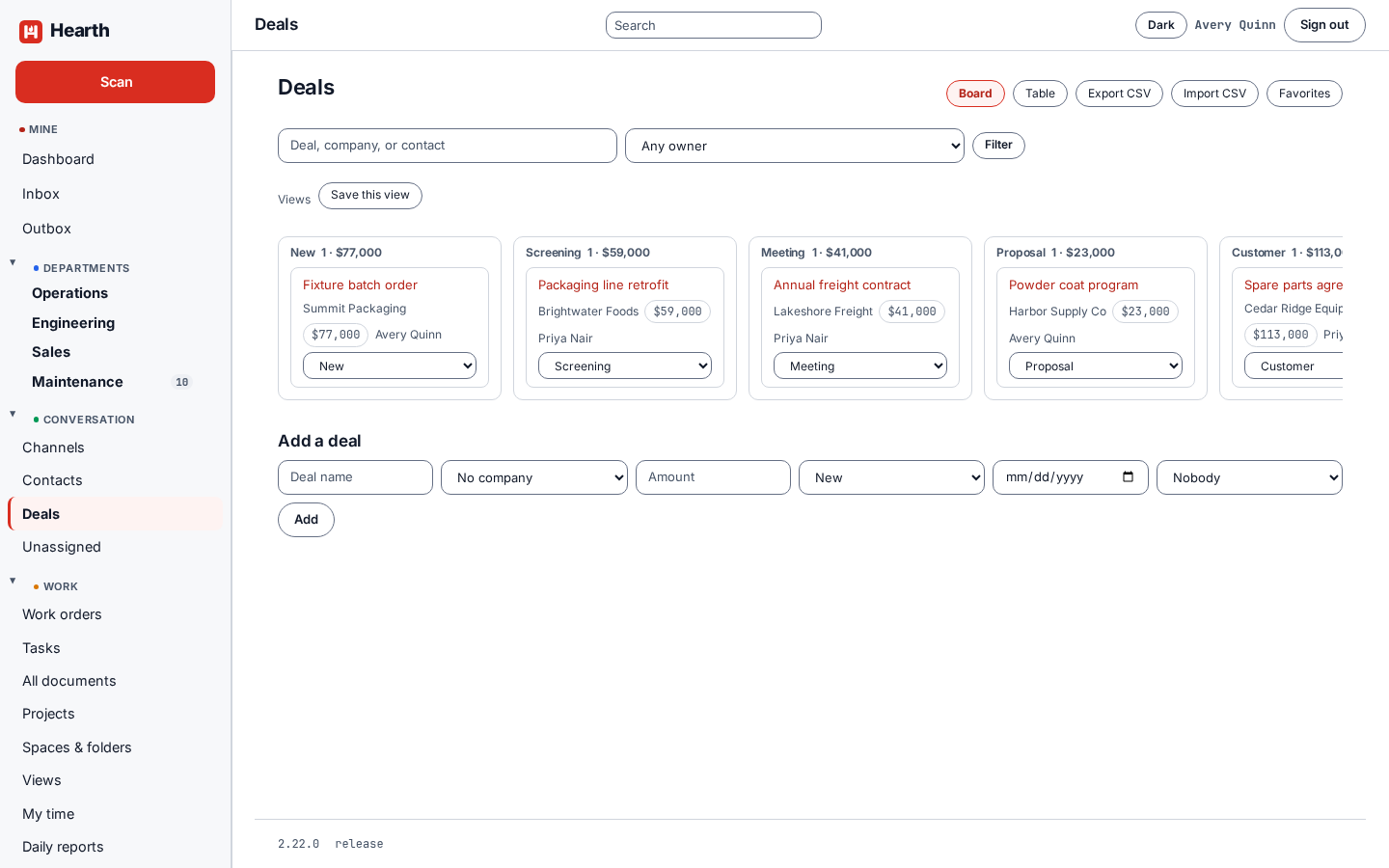
Open Deals. The board has one column per stage: New, Screening, Meeting, Proposal, Customer, Won, Lost, and No response. Each column shows its count and its total value. Drag a card to move it, or use the stage picker on the card. Table shows the same deals as a sortable list, and Export CSV saves what the list is showing.
Add a deal from the form under the board with a name, a company, an amount, a stage, a close date, and an owner. An owner is a label and a filter, and never decides who can see a record.
Companies and contacts
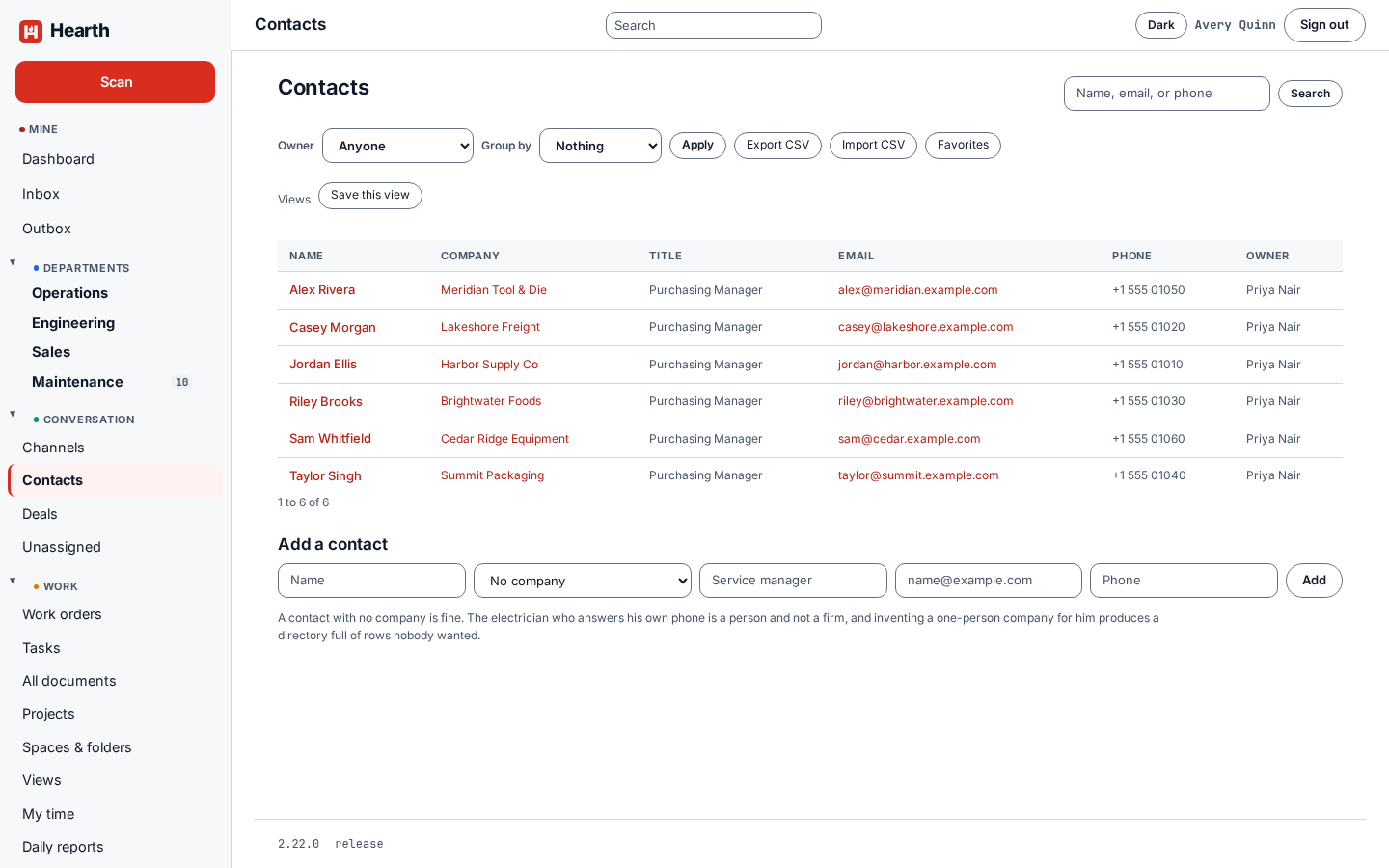
Contacts lists people, and each can belong to a company or stand alone. A company holds an owner, website, address, annual revenue, types (client, prospect, vendor, partner, and anything you add), and free tags. Use Group by, the owner filter, and Save this view to work the list your way. Import CSV brings in an existing list.
Notes and calls
A note or a call can be logged on a company, a contact, or a deal, and one entry can be about all three so it shows on each timeline, newest first. Tasks linked to a record appear on its page under Work and assets.
Unassigned
Unassigned lists everything nobody owns yet, oldest first. Claim a record or hand it to someone from the picker, and it leaves the queue.
The API
Companies, contacts, deals, and activities are also available over a REST API with bearer tokens that you create on your account page. A token acts as the person it belongs to, so it sees what that person sees. Creates take an optional external_id so a retried request never makes a duplicate.